


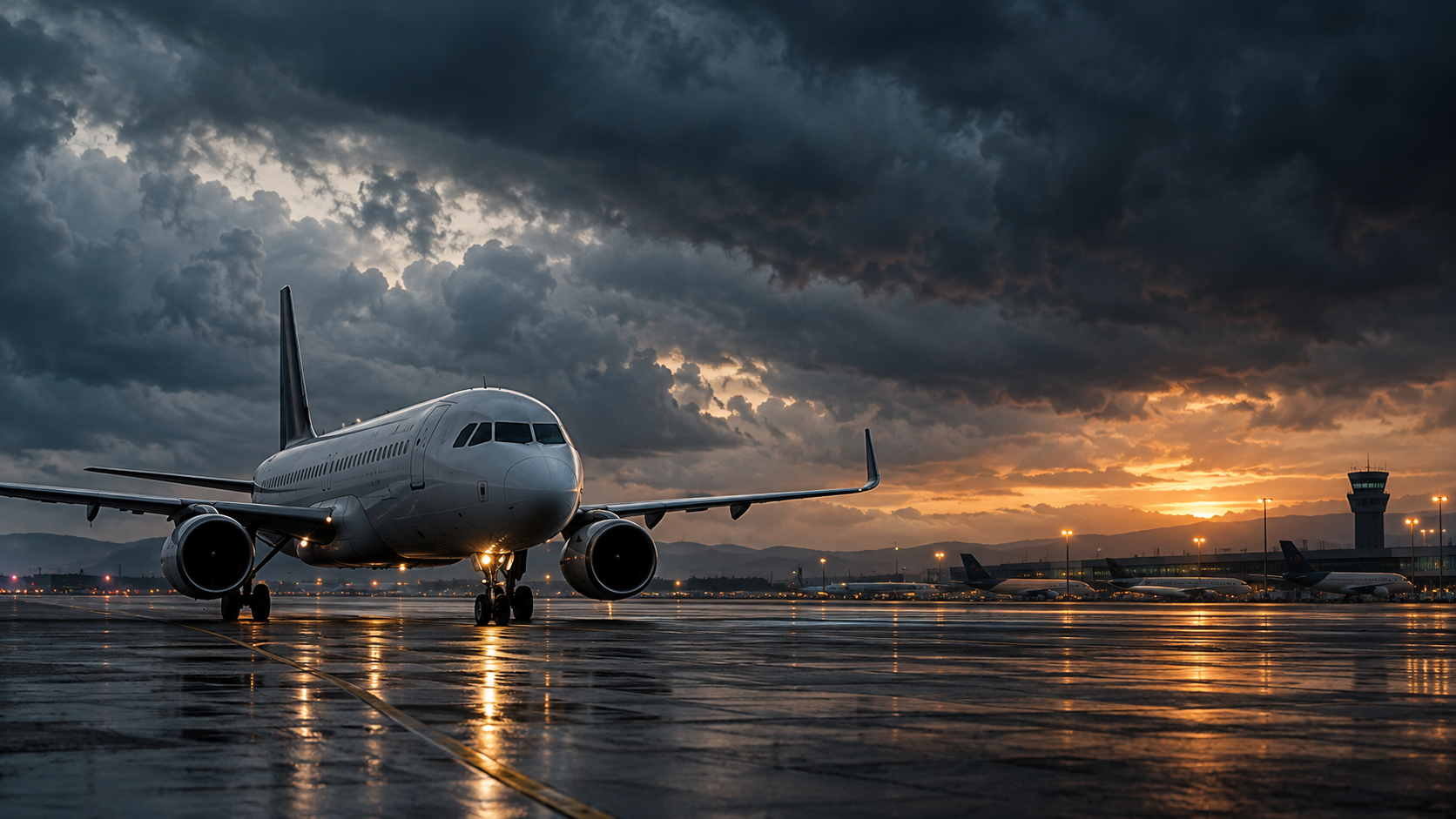
As 2026 moves through its final quarter, the outlook for aviation is becoming increasingly uncertain. The crisis in the Middle East continues without a lasting resolution, jet fuel prices have risen dramatically, and airlines are facing growing financial pressure. For an industry that operates on relatively thin margins even in good times, the situation is worrying.
I follow developments in aviation closely as part of my work, but in recent months, reading the news has felt unusually exhausting. Not simply because the industry is struggling, but because there is something so much bigger behind it all.
Rising costs and shrinking margins
Jet fuel prices have reached levels that will inevitably have consequences. Many airlines have so far been protected from the worst of the increases through fuel hedging agreements. However, those protections will not last forever, and the situation varies considerably between airlines.
As existing hedging contracts expire, more carriers will become exposed to significantly higher fuel costs.
Ryanair’s CEO Michael O’Leary recently warned that European airfares could increase by as much as 20% in 2027 (Reuters, 20 October 2026). That is quite a statement from an airline whose business model has been built around affordable air travel.
And this is not just about individual airlines.
In its June 2026 financial outlook, IATA revised its forecast for global airline profits from USD 41 billion to USD 23 billion. The expected net profit margin fell to just 2%, despite continued passenger demand and high load factors.
Think about that for a moment. An industry transporting billions of passengers and generating more than a trillion dollars in annual revenue is expected to make a net profit of only around USD 4.50 per passenger.
It does not leave much room for things to go wrong.
Full aircraft do not necessarily mean profitable flights
One of the most persistent misunderstandings about aviation is that full aircraft automatically mean profitable airlines. They do not.
An airline can operate with excellent load factors and still struggle financially if operating costs rise faster than revenues. Aircraft utilization, ticket yields, fuel prices, airport charges, maintenance, labor costs, and network efficiency all play their part. I have written about this before in my article A full aircraft does not always mean a profitable flight.
There is also a limit to how much airlines can pass on to passengers. When ticket prices increase and household budgets are already under pressure, demand may eventually weaken. For airlines, finding the right balance between fares, capacity and demand becomes increasingly difficult.
Wizz Air is one example of how quickly operating conditions can affect airline’s route network. The airline recently canceled its planned winter operations to Abu Dhabi and Dubai because airspace restrictions would require significantly longer and more expensive routings (The National, 8 October 2026). Just a couple of weeks later, Simple Flying reported further changes affecting flights to 20 destinations (Simple Flying, 19 October 2026).
Not every route cancellation can be directly attributed to the geopolitical situation, of course. Airlines constantly review their networks and move capacity to markets where they expect better returns. But when costs rise sharply and uncertainty increases, those decisions become even more difficult.
And I suspect we will see many more of them in the coming months.
What does this mean for regional connectivity?
This is where the situation becomes particularly interesting, but also concerning, from the perspective of regional airports and air connectivity.
Developing a new air route is never simply about demonstrating passenger demand. The airline must also be able to operate that route profitably, and the route must also be more attractive than the other places where the airline could use the same aircraft.
A route can have a reasonable level of demand and still be discontinued. It might be performing relatively well, but not well enough compared with another market. Or its cost structure may no longer support a commercially viable operation. Sometimes even a relatively small increase in operating costs can change the calculation.
This is something I find myself explaining quite often in discussions about regional aviation. Local demand matters. Regional economic development matters. The willingness of airports, businesses and destinations to support a route matters. But ultimately, an airline must be able to make money by operating it.
And many of the factors influencing that decision are completely beyond the control of the local region. When airlines come under financial pressure, protecting existing routes may become just as challenging as developing new ones. Smaller markets and marginally profitable services can be especially vulnerable when carriers start reviewing their capacity.
For regional airports, the consequences can be significant. Losing a connection is not simply a matter of having fewer flights on the departure board. It can affect business travel, international accessibility, tourism and the ability of people to reach their families and communities.
Once a route has disappeared, bringing it back is not necessarily easy.
An industry affected by a much bigger problem
I am concerned that the remaining months of 2026 may bring more difficult news for aviation. Further route cancellations, capacity reductions and financial problems seem entirely possible, particularly among airlines already struggling with profitability.
But aviation is ultimately only one small part of a much bigger problem.
Following developments in the Middle East, Ukraine and the United States, I increasingly find myself wondering where the world is heading.
Wars, geopolitical tensions and economic uncertainty have consequences that extend far beyond national borders. They affect businesses, economies and everyday life across the world.
Yet the heaviest price is paid by people whose lives, homes and safety are directly threatened by conflict.
Compared with that, a more expensive flight ticket or the loss of an air connection seems like a very small problem indeed. And still, these consequences are real too. Aviation connects people, families, businesses and entire regions. It creates opportunities and makes distances shorter. When those connections disappear, the world becomes a little less accessible.
Perhaps what troubles me most is the feeling of powerlessness.
As an aviation professional, I can analyze costs, understand network decisions and discuss the commercial realities behind airline operations. But as an ordinary person watching the news, I increasingly find myself asking a much simpler question. What on earth would it take to bring all this madness to an end? How do we return to a world where people and businesses can plan for the future with at least some degree of confidence?
I do not know the answer. And looking at this morning’s headlines, I am not entirely convinced that many others do either.
I can only hope that one day, preferably sooner rather than later, the biggest headlines in aviation will once again be about new connections, new opportunities and bringing people together. Rather than wars, closed airspace and the consequences of conflicts.
Surely it is time for some better news.
Note: This article is based on my original Finnish-language post but has been adapted for an international audience. AI assistance was used to refine the English wording and check grammar. The content and views are my own, and I have personally reviewed and edited the final version.